Why AI Is Reshaping Memory Supply: A Practical Q&A with Graham Scott on What Procurement Can Do Next
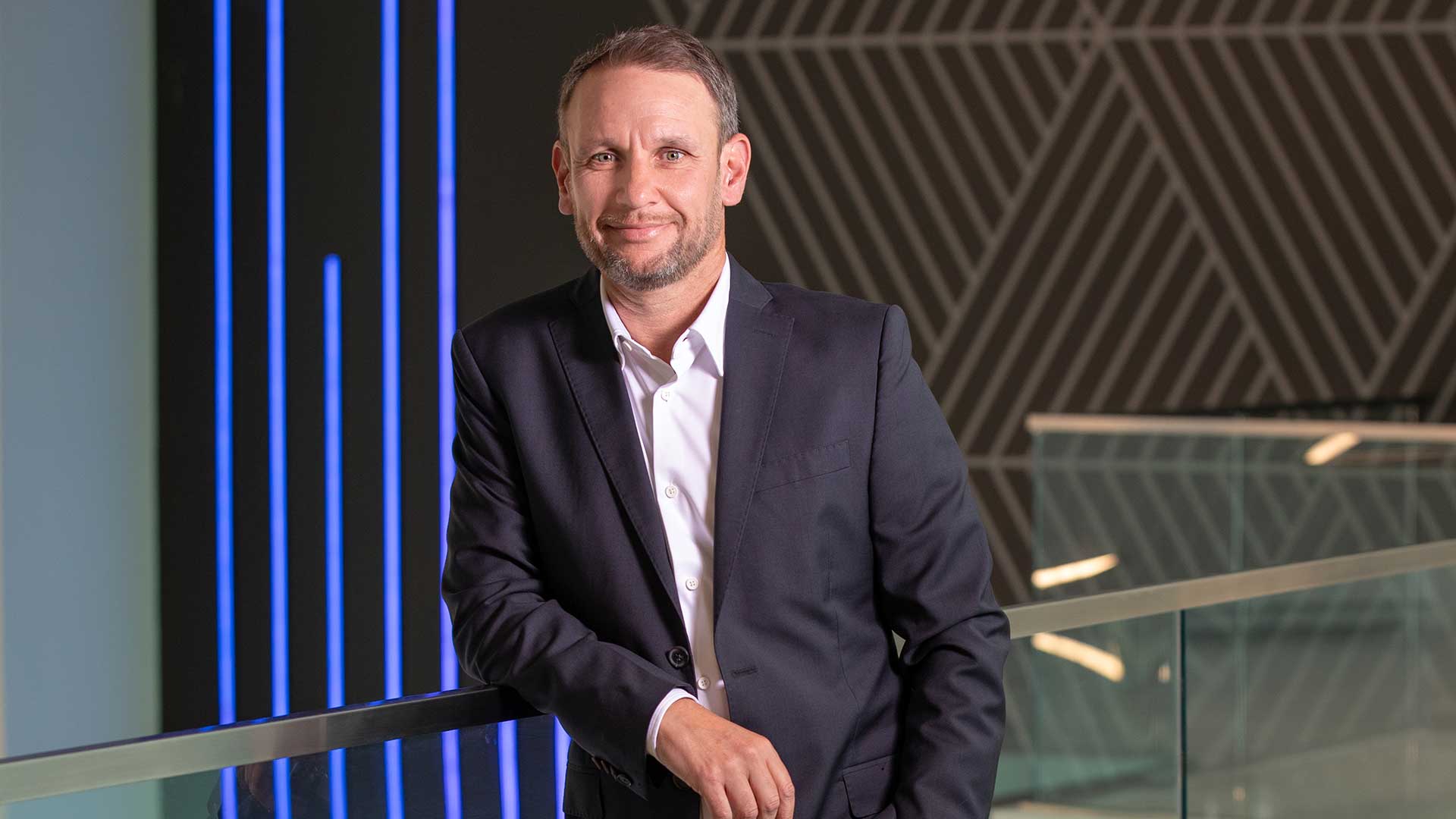
April 30, 2025 | By Jabil Procurement & Supply Chain Team
The semiconductor market has always been cyclical. What’s changing is the tempo, the peaks and troughs are arriving faster, and the volatility is sharper than many teams are set up to absorb.
In this conversation, Graham Scott, Jabil’s Chief Procurement Officer, breaks down what he’s seeing in the semiconductor market, and why he believes we’ve been in shortage since early 2025. He also explains why memory is following a different path than many “standard” components, and what that means for organizations still supporting long-life products. Finally, Graham shares practical steps procurement, engineering, and supply chain leaders can take now to protect continuity when legacy memory is getting harder to source.
Key Takeaways
- Volatility is compressing cycles: Semiconductor peaks and troughs are arriving faster, making disruption a structural planning factor, not an occasional exception.
- AI is tightening memory supply: Capacity is being pulled toward higher-value memory, which increases allocation risk for legacy components and long-life programs.
- Optionality is the fastest lever: Broaden AVL coverage and design in spec flexibility (tolerance, speed, voltage) to expand feasible supply paths.
- Follow the roadmap, and reuse when needed: Stay aligned to where suppliers are investing, and leverage component recovery when a “bone pile” of cards can help mitigate shortages.
Q1) What are you seeing in the semiconductor market right now, and why do cycles feel more volatile?
Graham Scott: Semiconductors are inherently cyclical, but the big difference is that cycles appear to be getting shorter and more volatile. If we look at the last cycle, it probably started four, four and a half years ago. Over the last couple of decades, we’ve repeatedly seen “feast and famine,” and capacity decisions amplify that behavior.
When demand looks strong, capacity expansion plans accelerate. When the downcycle hits, the brakes get applied, expansions slow, capacity gets idled, and investment shifts. In those moments of “feast and famine”, you see lots of up cycles as far as capacity investments. Then in the down cycle, the brakes tend to be hit on capacity expansion plans, and capacity gets idled. In my view, we’ve been in a shortage environment since the early part of calendar 2025.
Q2) Why is the memory market different from other semiconductor categories?
Graham Scott: Memory is being driven by the growth in AI requirements, and that’s creating a very different set of incentives for manufacturers. We’re seeing demand shift toward higher-value memory, especially high bandwidth memory (HBM), because of what hyperscalers and AI infrastructure require.
Meanwhile, more traditional products like DDR4/DDR5 can become less attractive in relative terms. Margins are lower, and the strategic priority moves to where returns and long-term demand are strongest. That reshapes where capacity goes.
Q3) How does that shift create risk for “everyday” categories like consumer, automotive, and healthcare?
Graham Scott: The top three manufacturers of memory, Micron, Samsung, and Hynix, are focusing their efforts and energy on the demands for AI. That leaves a lot of memory content to be supported by Taiwanese suppliers, some smaller American suppliers, maybe even Chinese suppliers, and they just don’t have the same capacity as the big three.
The result is that more demand gets pushed onto smaller suppliers (including regional suppliers), and they don’t always have comparable scale. If you’re supporting long-life products, industrial, automotive-adjacent, certain healthcare devices, consumer electronics with cost sensitivity, you can quickly end up in a situation where there simply isn’t enough capacity to cover all customers.
We’re very fast approaching an allocation market if we’re not in it already. And it’s going to be difficult over the next year, maybe two years, to get some of these legacy type components out of the memory houses.
Q4) If organizations are realizing this late, what actions should they take right now to mitigate disruption?
Graham Scott: The immediate move is to maximize optionality. Get as much flexibility as you can into the Approved Vendor List (AVL) and ensure you aren’t structurally locked into single-source components wherever it’s avoidable.
Flexibility doesn’t always require a total redesign. Sometimes it’s as simple as widening acceptable parameters, tolerance changes, speed grades, voltage variants, anything that opens the aperture for supply. The goal is to expand the set of feasible parts and suppliers, so you have more ways to keep production moving as availability shifts week to week.
The advice would be flexibility on technology and supply and follow that technology roadmap as much as you can.
Q5) Longer-term, what should engineering and procurement teams do differently to avoid getting trapped in legacy parts?
Graham Scott: You need to pay attention to the supplier’s technology roadmap. If you’re building designs around components that are 10 years old, suppliers may not be motivated to keep manufacturing them, because they want to prioritize higher-value, higher-margin products.
So from a design and lifecycle perspective, align with the products and platforms where suppliers are actively investing. In many cases, those parts can still be cost-effective, but the bigger advantage is that they’re more likely to remain available and supported across the lifecycle you need.
Q6) You mentioned Retronix and component recycling. How can circularity help in a shortage market?
Graham Scott: One option we have is leveraging component recovery and reuse capabilities, specifically through Retronix, which Jabil acquired to expand circular economy services.
At a high level, the idea is: if you have boards with valuable semiconductor content, processors, memory, other constrained parts, those components can sometimes be recovered, prepared (for example through processes like reballing/retinning), and made available to resolder and put back into a board so they’re functionally correct.
That capability could be extremely valuable in today’s market when we’re seeing a lot of issues with processors and memory. There could be a bone pile of cards lying around somewhere that somebody could actually utilize to help mitigate the shortages that they’re facing today.
Q7) How did procurement and supply chain services evolve into an external offering?
Graham Scott: Jabil is known first as a manufacturing company, that’s our core. But over decades, we also built deep internal capabilities in procurement and supply chain operations. Over time, it became clear we had such a strong capability that we could help others, even customers we’re not manufacturing for, and that we had a right to play within the services field.
That’s how the practitioner-led services organization emerged: organizations can engage for procurement, supply chain, logistics, strategy, even resourcing and execution support, without needing to be a traditional manufacturing customer.
Q8) What falls under procurement services, and what differentiates your approach?
Graham Scott: Procurement services can span both direct and indirect categories. It can include managing bills of material, supporting component flow, helping navigate spot shortages, and providing advisory support where teams need additional expertise or capacity.
What differentiates us is that we do this every single day. We are out in the market buying components, whether it’s on the direct side (electronics, mechanical) or indirect (goods and services). That’s what keeps Jabil running: without components and materials, we don’t have a business. Our procurement experts are working in the field to get our unfair share of components, develop supplier relationships, and create as much value as possible for Jabil and for our customers. And because every supply chain starts from a different place, we can meet you wherever you are, with services that are tailor-made to your needs, from targeted support in a single category to broader end-to-end procurement and supply chain execution.
Q9) Why do “people, process, and technology” have to come together (instead of picking one)?
Graham Scott: You need all three.
- People: culture and behavior are foundational. In procurement, we focus on consistent behaviors, communication, credibility, consistency, collaboration, because how teams operate determines whether the function scales.
- Process: with large, complex supply chains, you can’t run ad hoc. Process creates repeatability and helps teams drive value consistently.
- Technology: without continuous investment, you get left behind. Technology should enable practitioners, augment decision-making, accelerate visibility, and help the function keep pace as complexity increases.
The mistake is treating technology as a replacement for strong people and process. The real advantage comes when tech amplifies a disciplined operating model.
The Bottom Line on Memory, Allocation Risk, and Resilience
As memory demand shifts toward higher-value applications, availability for legacy components can tighten quickly, and often unevenly across industries. Graham’s perspective is straightforward: volatility isn’t a temporary anomaly, it’s becoming a defining feature of the semiconductor cycle. Teams that expand optionality in the AVL, design in spec flexibility, and stay aligned to supplier technology roadmaps create more paths to continuity when allocation pressures rise. And in the tightest scenarios, circular recovery options like component reuse can serve as an additional lever to keep programs moving.
Complexity in procurement and supply chain isn’t slowing down, and execution is what separates strong strategies from real results. Jabil Procurement & Supply Chain Services brings 60+ years of practitioner expertise and the scale to support high-variability, high-stakes operations, backed by $25B+ in annual procurement spend, 38,000+ supplier relationships, and a global footprint spanning 100+ locations across 25+ countries. Across consulting, managed services, logistics management, and market intelligence, we help teams translate insight into repeatable execution so performance improvements stick, even as conditions change.